Making Up an Actor with a Text Prompt? That’s Horrifying” — What James Cameron Said About Generative AI
“Making Up an Actor with a Text Prompt? That’s Horrifying” — What James Cameron Said About Generative AI
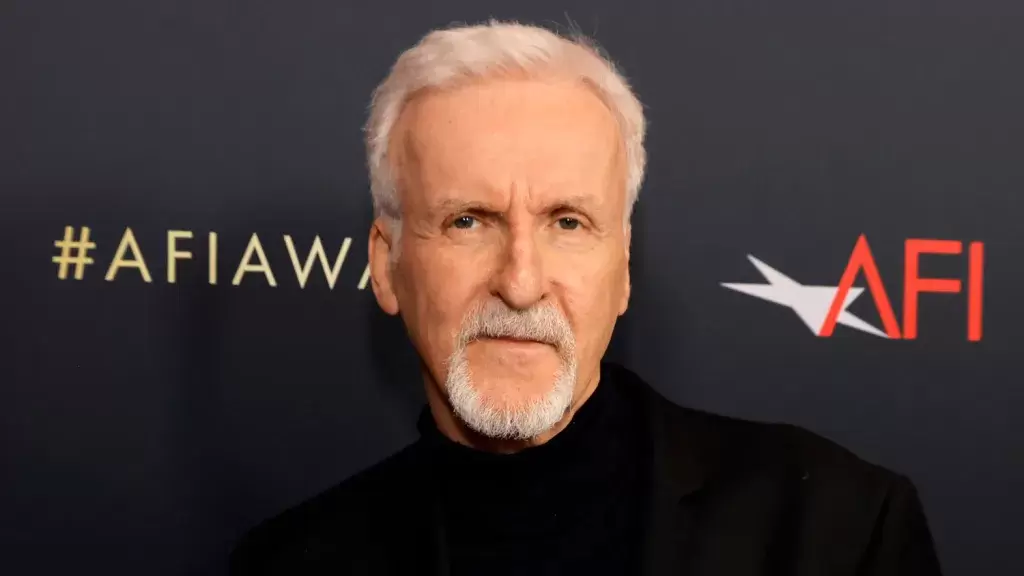
In a candid interview ahead of the release of Avatar: Fire and Ash, legendary filmmaker James Cameron delivered a forceful critique of generative artificial intelligence in filmmaking, calling the idea of AI-generated actors and performances “horrifying.” :contentReference[oaicite:3]{index=3}
🎬 A Clear Line Between Performance Capture and AI Fabrication
Cameron — whose films have long pushed the boundaries of visual effects and performance capture — explained that what he and his teams do on productions like the “Avatar” series is fundamentally different from generative AI. Traditional performance capture involves real actors performing on set (in some cases, underwater, using a 250,000-gallon water tank) with multiple cameras capturing their body movements and facial expressions. These raw performances are then used as the basis for digital characters. :contentReference[oaicite:4]{index=4}
By contrast, generative AI can now, in principle, “make up a character, make up an actor, make up a performance from scratch — with a text prompt.” That, Cameron insists, is not what he — or cinema as an art form — should represent. :contentReference[oaicite:5]{index=5}
“They can make up an actor. They can make up a performance from scratch with a text prompt. It’s like, no. That’s horrifying to me.” :contentReference[oaicite:6]{index=6}
For him, it’s not just a technical concern — it’s a matter of preserving the core human element in filmmaking. Human actors bring unique lived experiences, emotional depth, imperfections, and unpredictability; qualities that, in his view, generative AI — trained only on past data — simply cannot replicate. :contentReference[oaicite:7]{index=7}
🎥 Why Cameron Believes Generative AI Undermines Cinema
Cameron argued that generative AI threatens to reduce creative performance to formulaic remixes of existing art. Since AI models learn from what has already been done, they can’t produce something truly new or reflect an individual artist’s unique life experience. The result, he worries, would be homogenized performances: “a kind of average.” :contentReference[oaicite:8]{index=8}
Moreover, he draws a stark distinction between tools that enhance human artistry (like motion-capture, VFX) and tools that replace human artistry altogether. For him, generative AI, when used to fabricate performances, crosses a line — it undermines not just individual artists, but the essence of storytelling and cinema as a collaborative human craft. :contentReference[oaicite:9]{index=9}
He said that while he is not “afraid of new technology,” the arrival of generative AI marks perhaps the most critical challenge for the film industry right now. The worry is not progress per se, but losing the emotional authenticity and human spontaneity that real actors bring to the screen. :contentReference[oaicite:10]{index=10}
🚨 What This Means for the Future of Filmmaking
- Artistic integrity vs. automation — Cameron’s remarks reflect a broader tension in entertainment: balancing the appeal of cost-efficient, fast AI tools with the preservation of human creativity, performance, and unpredictability.
- Homogenization risk — If generative AI becomes widespread for character creation, performances might gradually lose individuality, uniqueness, and emotional depth that come from real human experiences.
- Ethical and existential questions — Beyond artistry, there are deeper concerns: what happens to actors, writers, and other creatives if AI can “generate” them? What becomes of ownership, authenticity, and consent when performances are synthesized rather than lived?
- A call to conscientious use — By contrasting generative AI with motion-capture (which still relies on real actors), Cameron subtly suggests that technology should augment — not replace — human artistry. For filmmakers, AI could remain a powerful tool, but not a substitute for human performers.
In sum: James Cameron’s objections to AI-generated actors are more than nostalgia. For him, it’s about safeguarding the essence of cinematic storytelling — human emotion, human performance, human unpredictability. The rise of generative AI raises urgent questions: when efficiency and creativity clash, what kind of cinema do we want to preserve?