Teen Innovators Launch Bindwell — Using AI to Reinvent Pesticides and Securing Paul Graham’s Backing
Teen Innovators Launch Bindwell — Using AI to Reinvent Pesticides and Securing Paul Graham’s Backing
Two teenagers have just shaken up the agricultural world. The startup they co‑founded, Bindwell, recently raised US$6 million in seed funding , co‑led by General Catalyst and A Capital — and bolstered by a personal check from Paul Graham, co‑founder of Y Combinator. :contentReference[oaicite:5]{index=5}
🌱 From Dorm‑Room Project to Agro‑Startup: Bindwell’s Origin Story
- Bindwell was founded in 2024 by Tyler Rose (18) and Navvye Anand (19) , who first explored AI‑driven molecule discovery during the 2023 Wolfram Summer Research Program. Their initial work focused on protein‑ligand models aimed at drug discovery. :contentReference[oaicite:6]{index=6}
- In 2024, they realized the same AI techniques could be repurposed to design pesticides — a field long reliant on decades‑old chemical compounds. Their motivation was partly personal: Rose’s aunt farms in China, and Anand has roots in Punjab — both aware of the limitations of current pest control solutions. :contentReference[oaicite:7]{index=7}
🧪 What Bindwell Does — AI‑Powered Precision Pesticide Design
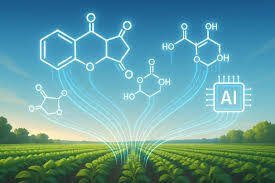
Rather than selling generic AI tools to big agrochemical companies, Bindwell chose a more ambitious path: they build pesticide molecules themselves using AI — then license the resulting IP . :contentReference[oaicite:8]{index=8}
Their internal AI stack includes:
- Foldwell — a structure‑prediction model inspired by modern protein‑folding systems, to map target proteins in pests. :contentReference[oaicite:10]{index=10}
- PLAPT — a protein‑ligand interaction model that can screen known synthesized compounds in hours. :contentReference[oaicite:12]{index=12}
- APPT — a protein‑protein interaction model used for biopesticide screening, reportedly outperforming existing tools on benchmark tests. :contentReference[oaicite:14]{index=14}
- An uncertainty‑quantification layer — flagging which predictions are reliable and which need more data. :contentReference[oaicite:15]{index=15}
With this toolset, Bindwell claims it can search billions of molecules for potential pesticide activity — potentially 4× faster than older methods relying on brute‑force chemistry or traditional lab testing. :contentReference[oaicite:16]{index=16}
Their method: identify proteins unique to a target pest (and absent in humans, beneficial insects or aquatic life), then design molecules that bind to and disable those proteins — greatly reducing collateral environmental harm. :contentReference[oaicite:17]{index=17}
💸 Funding, Pivot & Why It Happened
- Initially, Bindwell entered Y Combinator’s Winter 2025 cohort hoping to sell AI‑tools to legacy agrochemical firms. However, uptake was weak — many firms were reluctant to adopt AI. That’s when Graham suggested a pivot: build and own the pesticide molecules themselves. :contentReference[oaicite:18]{index=18}
- The $6 M seed round (with participation from investors like General Catalyst, A Capital, SV Angel, plus Graham) now funds R&D, lab operations, and scaling efforts to bring AI‑designed pesticides toward market readiness. :contentReference[oaicite:20]{index=20}
According to Rose, this pivot — from tool vendor to molecule designer — is vital. Instead of hoping agrochemical companies will change, Bindwell aims to lead from the front. :contentReference[oaicite:21]{index=21}
🌍 Why This Matters — Potential Impact on Agriculture & Environment
- Global pesticide use has doubled over the past decades — yet crop losses from pests remain high, and resistance keeps rising. Agriculture remains trapped in cycles of chemical escalation and diminishing returns. :contentReference[oaicite:22]{index=22}
- If Bindwell succeeds, its AI‑designed pesticides could be more targeted, effective, and safer — reducing collateral damage to beneficial species (like pollinators), ecosystems, and potentially lowering environmental toxicity. :contentReference[oaicite:23]{index=23}
- It’s also a case of applying modern drug‑discovery technology to agriculture — a space that historically has lagged in innovation, despite being critical to food security and sustainability.
⚠️ Challenges Ahead — Big Promises, Big Tests
- Designing molecules is only the first step: it’s necessary to validate efficacy and safety in labs, then conduct field trials (some are planned in India and China). Real‑world results may vary — biology and ecology are complex. :contentReference[oaicite:24]{index=24}
- Regulatory approval, manufacturing scale‑up, cost, and adoption by farmers are unknown variables. Transitioning from lab‑designed molecules to widely usable pesticides is a long, costly journey.
- There’s always risk that AI predictions don’t translate into real-world effectiveness — or that unanticipated side-effects occur. Relying solely on computational predictions remains controversial in biochemistry.
🎯 Conclusion
Bindwell — a startup born from the work of two teenagers — is betting on AI to reinvent how we protect crops. With powerful investors, a bold pivot, and cutting‑edge AI tools, they’re aiming to disrupt a legacy agrochemical sector.
If successful, they could deliver more precise, effective, and environmentally friendly pesticides — a significant leap forward for sustainable agriculture. At the same time, whether AI‑designed molecules live up to the promise depends on rigorous testing, validation, and real‑world performance.
This story shows how AI isn’t just reshaping tech — it’s creeping into old, vital industries like agriculture, with the potential to make big, meaningful impact.